Radio telemetry relies on a receiver and antenna carried by a human and a tag attached in some way to an animal. The operator selects an animal using a dial on the receiver. They will then begin receiving signals from that animal’s tag if the animal is close enough.
To find the signal, the operator holds the antenna either vertically (for a closer scan) or horizontally (for a wider scan) and moves a dial to scan a wider or narrower area. That’s called setting the gain level. The gain determines how wide an area the antenna is searching for a signal from the animal’s collar.
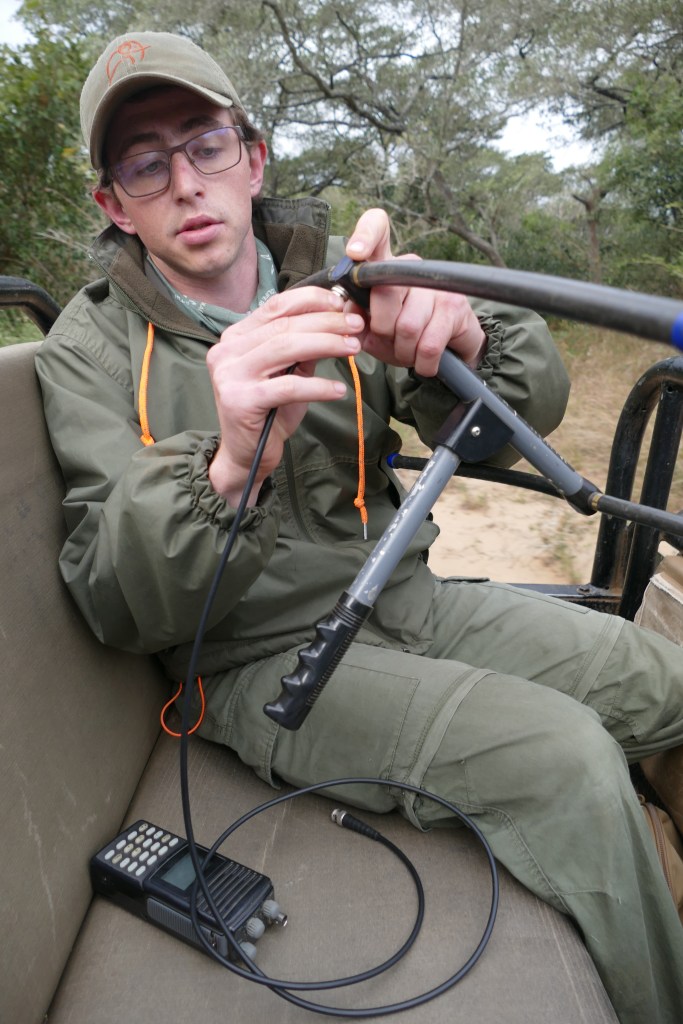
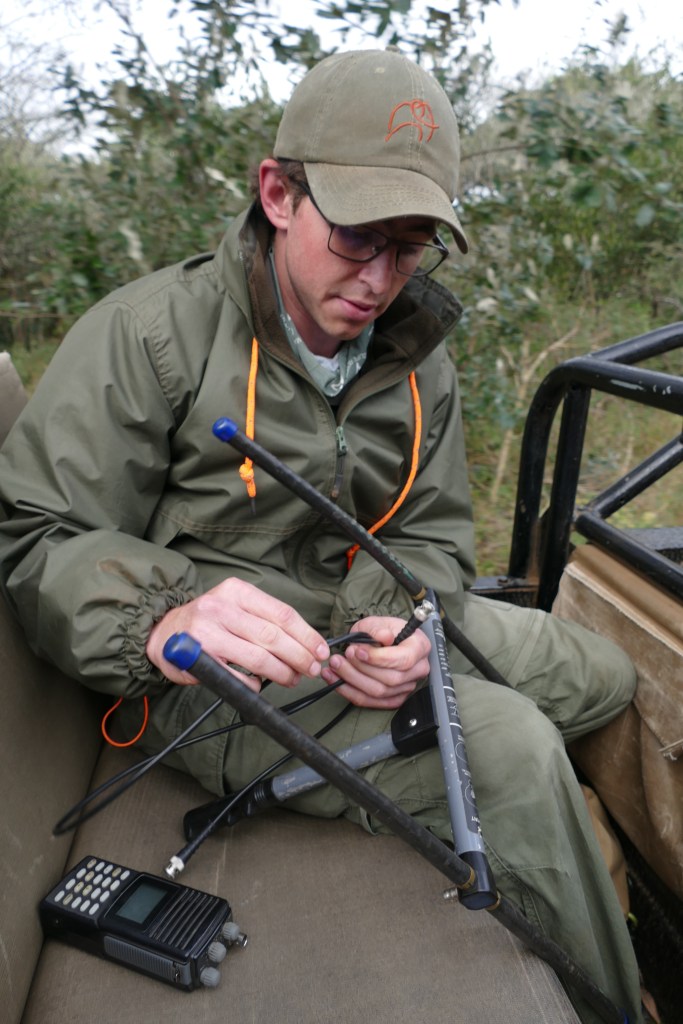
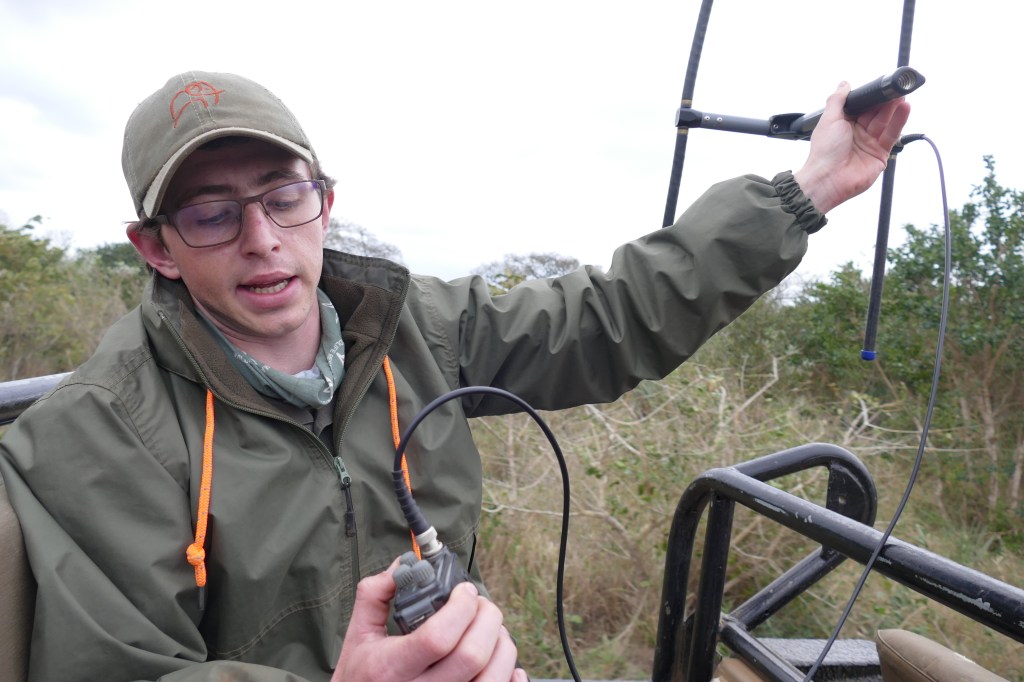
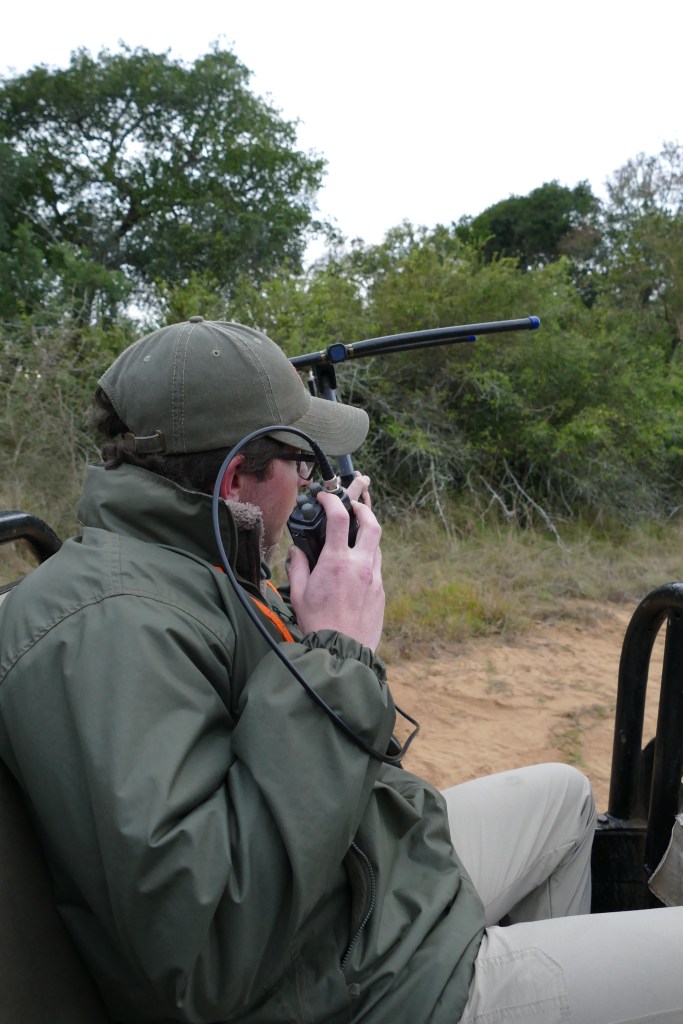
The operator starts by scanning the widest area and turns the antenna in all directions listening for a beeping sound from the receiver. Once they have figured out the direction of the animal, they make the area they are searching smaller (that’s dialing down the gain) to find a more precise position. The size of the area they are searching, th loudness of the beeping, and the direction in which the operator is pointing the antenna will give an approximate position for the animal.
When there is no “beep” you’ve lost the animal. Then you go back to scanning a wider area and hope to find the signal again.

 Conserve Our World